Summaries
Authors
- Alan Cooper 1
- Andrew Boulton 1
- Andy Nairn 1
- Byron Sharp 2
- Cass Sunstein 1
- Cathy O'Neil 1
- Daniel Kahneman 1
- Dave Trott 2
- David A. Aaker 1
- George Lois 1
- James Hurman 2
- James Webb Young 1
- Jenni Romaniuk 1
- Jerry Z. Muller 1
- John Hegarty 1
- Jon Lombardo 2
- Jon Steel 1
- Les Binet 3
- Malcolm Gladwell 1
- Orlando Wood 1
- Paul Arden 1
- Paul Feldwick 1
- Peter Field 3
- Peter Weinberg 2
- Phil Barden 1
- Richard Rumelt 1
- Richard Shotton 1
- Richard Thaler 1
- Robert Heath 1
- Rory Sutherland 1
- Ryan Wallman 1
- Sarah Carter 1
- Stephen King 1
- Wiemer Snijders 1
- William Poundstone 1

Malcolm Gladwell, The Tipping Point
The Tipping Point by Malcolm Gladwell explores the magic moment when an idea, trend or social behaviour crosses a threshold and spreads like wildfire. Gladwell identifies three critical factors that help ideas reach a tipping point.
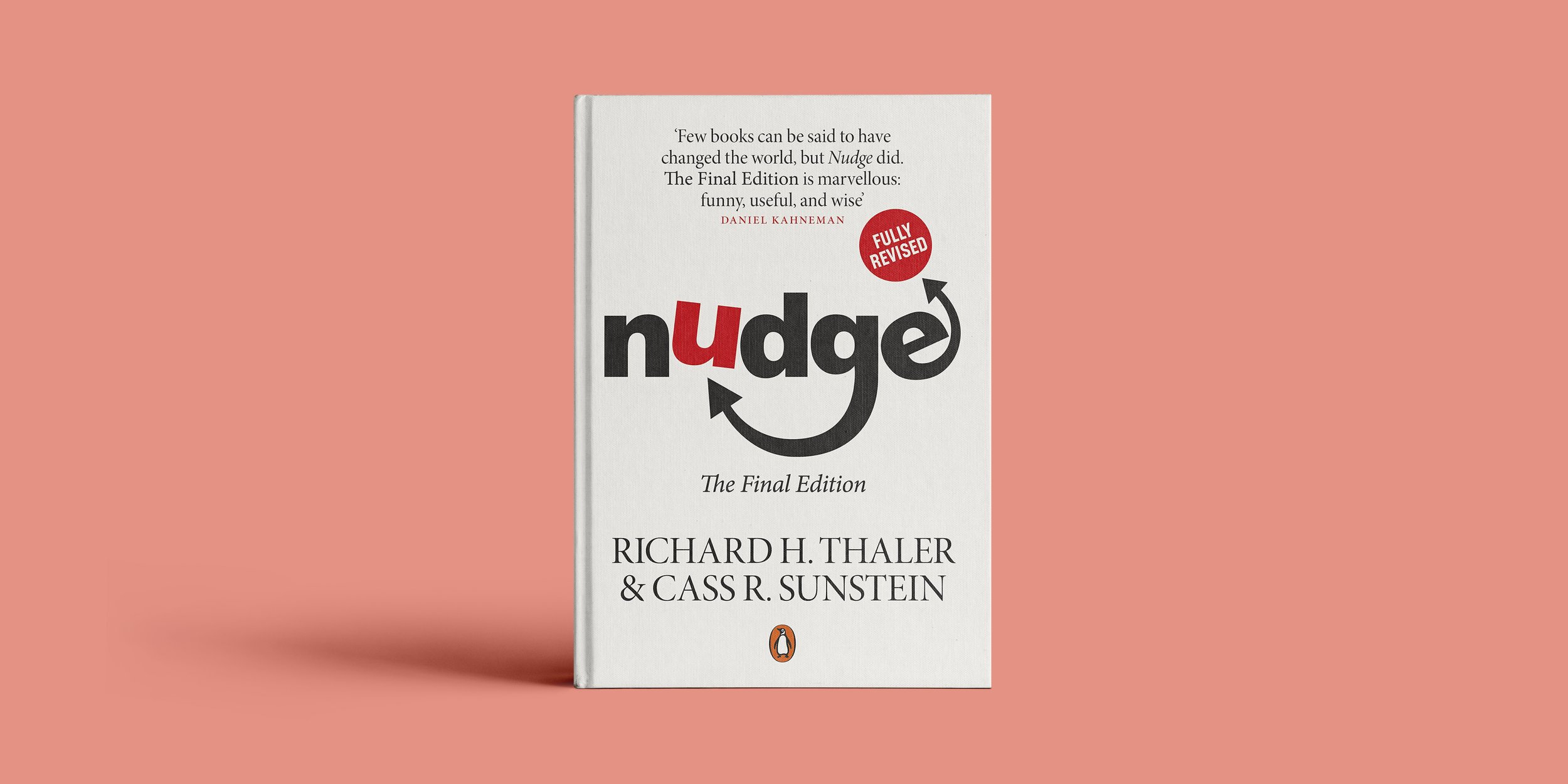
Cass Sunstein and Richard Thaler, Nudge
In 2008 Harvard Law School professor Cass Sunstein and economist Richard Thaler published Nudge. The book introduces “nudge theory”, a system for influencing decision making without restricting options. In order to nudge people towards making certain decisions, Thaler & Sunstein advocate for “choice architecture”; the practice of influencing choices by organising the context in which they are made. Here’s seven tools in the choice architecture toolbox.

Rory Sutherland, Alchemy
In his book Alchemy, the Ogilvy Vice Chairman, Rory Sutherland describes the surprising power of ideas that don’t make sense. In the opening pages Rory lists 11 rules of Alchemy. I’ll summarise them here in case anyone finds them useful.

Daniel Kahneman, Thinking Fast and Slow
The psychologist Daniel Kahneman won the Nobel Memorial Prize in Economic Sciences in 2002. His book Thinking Fast & Slow distills his work on human decision making. In doing so, it highlights both the brilliance & limitations of the human mind. Here’s a summary.

William Poundstone, Priceless: The Hidden Psychology of Value
In his book Priceless, William Poundstone describes coherent arbitrariness; the theory that people don’t judge prices in absolute terms but relative to their context. The book goes on to explain the many ways that our perceptions of value are not fixed. Here’s 7.

Phil Barden, Decoded
Decoded: The Science Behind Why We Buy, by Phil Barden, ends each chapter with a one-page distillation. I’ll use these 6 pages to summarise the book for those who haven’t read it.

Richard Shotton, The Choice Factory
I read Richard Shotton’s book The Choice Factory back in February after winning a copy through Neil Perkin’s newsletter, Only Dead Fish. Here’s a summary of the 25 behavioural biases that the book covers.