Summaries
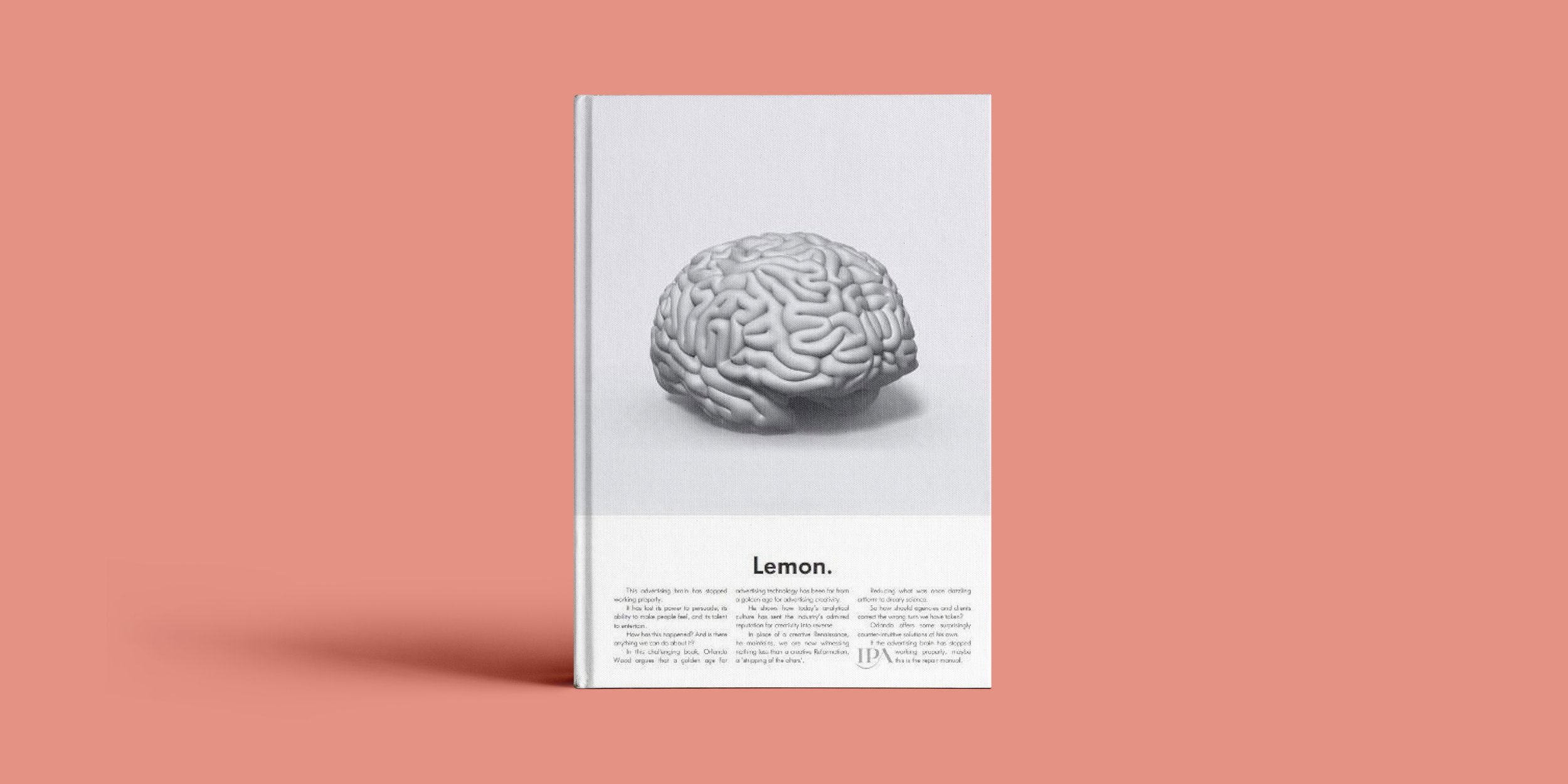
Orlando Wood, Lemon
Published in 2019, Orlando Wood’s book ‘Lemon’ uses a unique mix of neuroscience, art history and advertising effectiveness research to shows how an increase in abstract, left-brain thinking has spread across business and popular culture, undermined creativity and made advertising less effective. I’ve summarised the book for those who haven’t read it.

Alan Cooper, How To Plan Advertising
‘How to Plan Advertising’ is one of the foundational texts of account planning. Originally published in 1997 by the APG, and edited by Alan Cooper, the book brings together eleven essays from some of the discipline’s leading practitioners. Together the collection of papers explore how strategy, research and creativity can combine to produce more effective advertising. Here’s five of my favourite lessons from the book.
James Hurman and Peter Field, The Effectiveness Code
In 2020, James Hurman and Peter Field partnered with Cannes Lions and WARC to publish The Effectiveness Code. The seminal white paper introduced two important marketing frameworks: Creative Commitment and the Creative Effectiveness Ladder. I’ll summarise both below for those who haven’t read the report.
Wiemer Snijders, Eat Your greens
In the autumn of 2018 the Account Planning Group (APG) collaborated with Wiemer Snijders to publish Eat Your Greens. The book is a collection of articles written by 35 experts in marketing and communications. In each chapter, a contributor describes how they apply a principle of marketing science. Here’s a summary of five of my favourites.
Les Binet and Sarah Carter, How Not To Plan
In 2010, Les Binet and Sarah Carter began publishing a monthly ‘myth busting’ article for AdMap. 18 years later, and with support from the APG, Binet and Carter collated 66 of these essays to form the book ‘How Not To Plan’. Here’s eight of the book’s lessons that resonated with me most.

Stephen King, A Masterclass in Brand Planning
Stephen King was one of the two founding fathers of the ‘Account Planning’ discipline. On his retirement from J. Walter Thompson (JWT), the advertising agency published a collection of Stephen King’s papers that were written between 1967-1985. A Masterclass in Brand Planning is comprised of 20 of these essays. I’ll summarise five concepts from the book here for those who haven’t read it.

John Hegarty, Hegarty on Creativity
Sir John Hegarty was a founding member of Saatchi & Saatchi, TBWA London and Bartle Bogle Hegarty. In his book Hegarty on Creativity the advertising legend issues 50 thoughts on creative thinking. Here’s my favourite 6.

Malcolm Gladwell, The Tipping Point
The Tipping Point by Malcolm Gladwell explores the magic moment when an idea, trend or social behaviour crosses a threshold and spreads like wildfire. Gladwell identifies three critical factors that help ideas reach a tipping point.

Andrew Boulton, Copywriting Is…
“Copywriting Is…” by Andrew Boulton covers 30-or-so thoughts on how to think like a Copywriter. Here’s a summary of 8 of my favourites.

Andy Nairn, Go Luck Yourself
In 2021 Andy Nairn, the founder of advertising agency Lucky Generals, published Go Luck Yourself. The book covers 40 ways in which a brand can stack the odds in their favour.

The B2B Institute, 2030 B2B Trends
In 2020, The B2B Institute from LinkedIn published a report called “2030 B2B Trends: Contrarian Ideas for the Next Decade”. Here’s a summary of five themes that the paper covers.

James Hurman, The Case For Creativity
In 2016 James Hurman published “The Case For Creativity”. The book aims to answer a s seemingly simple question, does creativity make advertising more effective? Here’s three lessons from the book for those who haven’t read it.
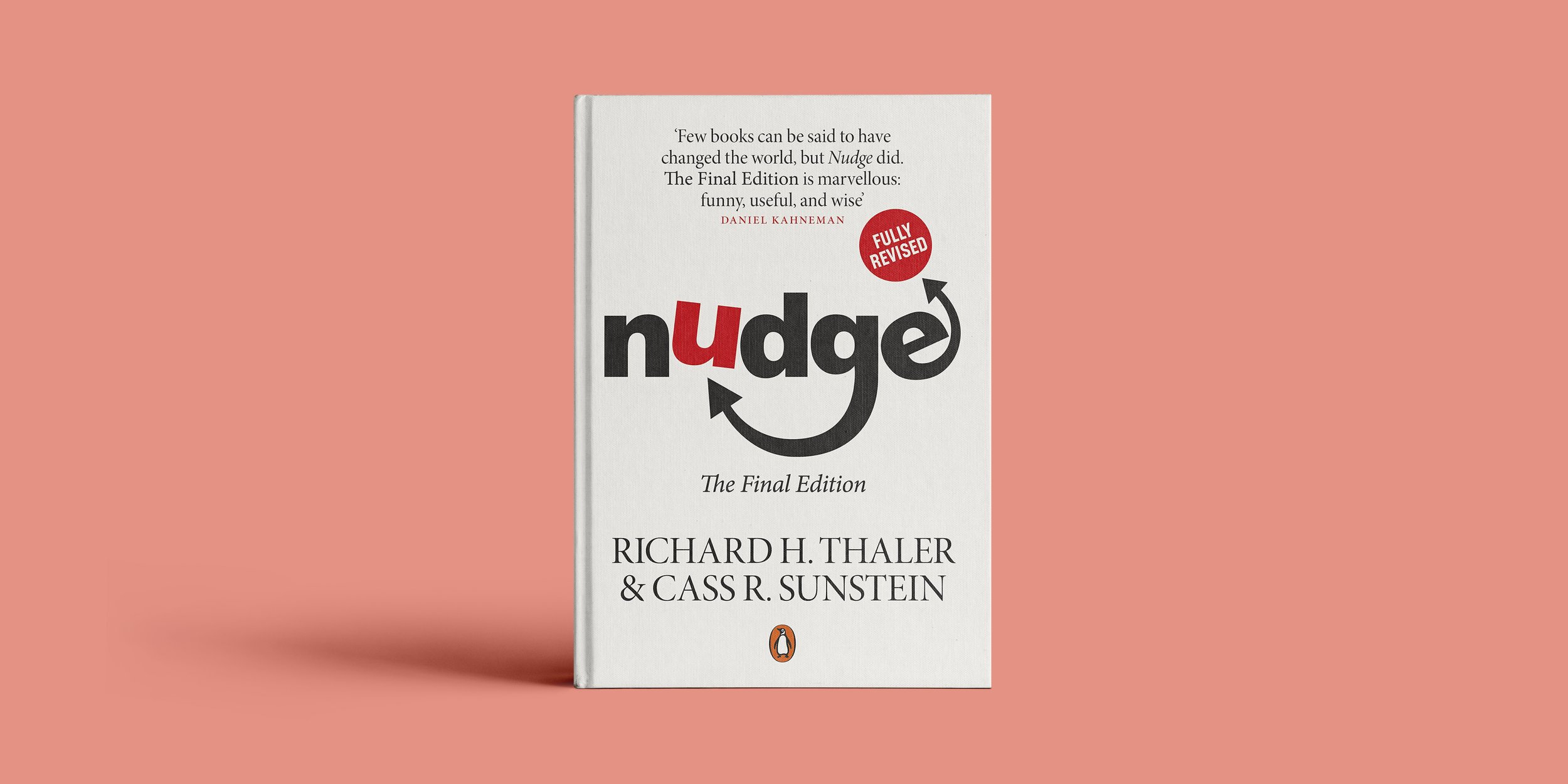
Cass Sunstein and Richard Thaler, Nudge
In 2008 Harvard Law School professor Cass Sunstein and economist Richard Thaler published Nudge. The book introduces “nudge theory”, a system for influencing decision making without restricting options. In order to nudge people towards making certain decisions, Thaler & Sunstein advocate for “choice architecture”; the practice of influencing choices by organising the context in which they are made. Here’s seven tools in the choice architecture toolbox.

Jerry Z. Muller, The Tyranny of Metrics
The Tyranny of Metrics is written by History Professor Jerry Z. Muller. In the book, Muller explores the often overlooked pitfalls that result from focussing too narrowly on performance metrics. I’ll summarise it here for those who haven’t read it.

Jenni Romaniuk and Byron Sharp, How Brands Grow Part 2
How Brands Grow Park 2 is written by Jenni Romaniuk and Byron Sharp of the Ehrenberg-Bass Institute. Where the original book covered the theory of how brands grow, Part 2 explores how to put this theory into practice. I’ll summarise it here for those who haven’t yet read it.

Dave Trott, Predatory Thinking
In Predatory Thinking, Dave Trott offers a masterclass in how to outwit the competition. The book draws lessons from from philosophy, military combat & colourful characters such as Picasso and Socrates. Here’s five things I learnt.

George Lois, Damn Good Advice
George Lois is a member of the Art Directors Hall of Fame, the Advertising Hall of Fame and the Copywriters Hall of Fame. His book, Damn Good Advice is full of lessons learnt from a career as one of world’s most famous ad executives. This summary highlights five of my favourites.

Cathy O’Neil, Weapons of Math Destruction
Cathy O’Neil is a data scientist who studied maths at Harvard, taught at MIT & worked at D. E. Shaw. In her book, Weapons of Math Destruction, she expresses concern about algorithmic influence in a number of fields. I’ll summarise the book here for anyone who hasn’t read it.