James Hurman and Peter Field, The Effectiveness Code
In 2020, James Hurman and Peter Field partnered with Cannes Lions and WARC to publish The Effectiveness Code.
The seminal white paper introduced two important marketing frameworks: Creative Commitment and the Creative Effectiveness Ladder.
I’ll summarise both below for those who haven’t read the report.
Creative Commitment
After analysing almost 5,000 effectiveness award entries, including cases from the Cannes Creative Effectiveness Lions database, the WARC database and the IPA Databank, the researchers found that three variables correlated with improved average effectiveness.
Increasing the number of channels that a campaign runs on, the amount of time that it runs for, and the level of media spend that is invested in it, all lead to higher overall effectiveness.
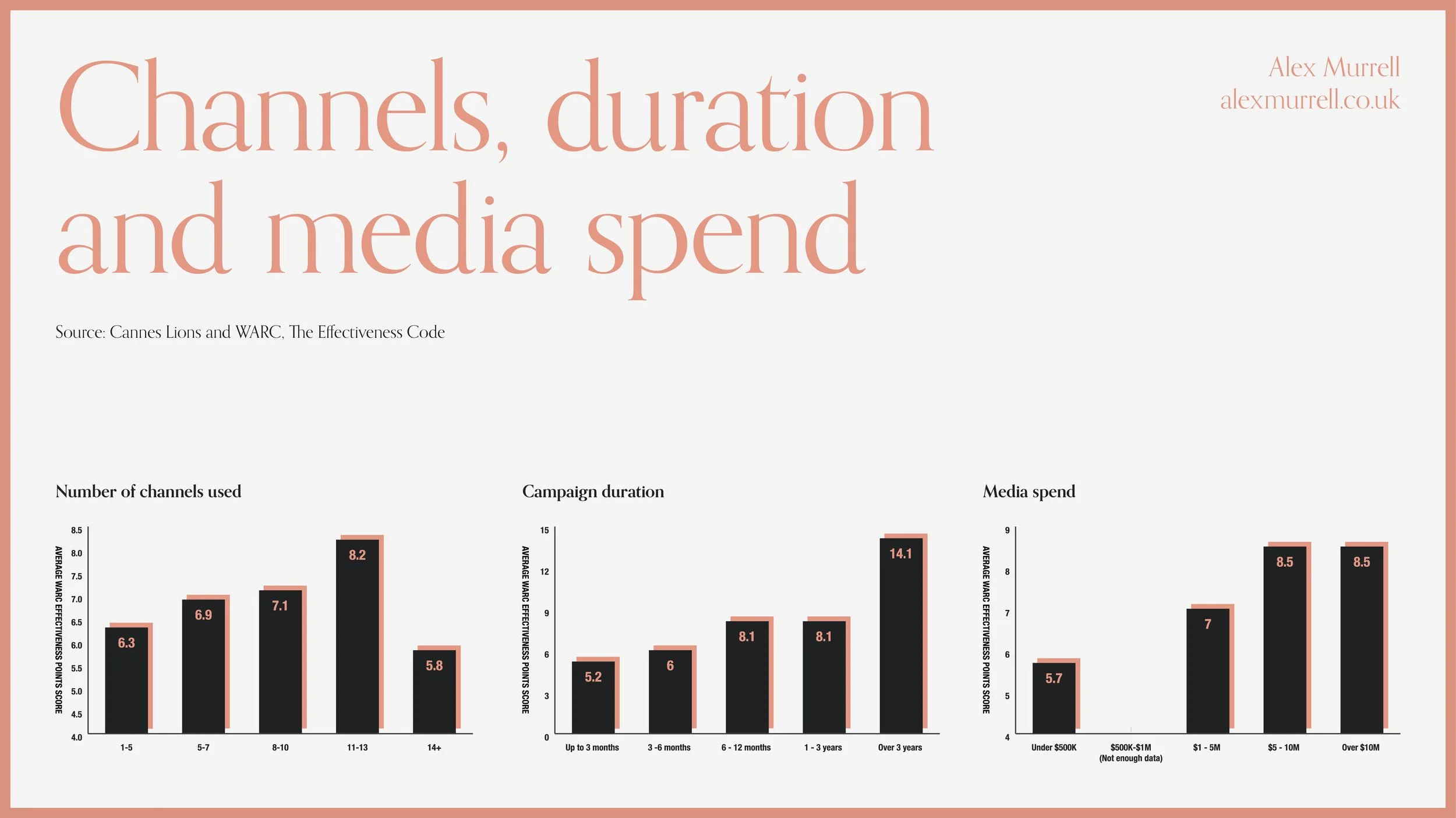
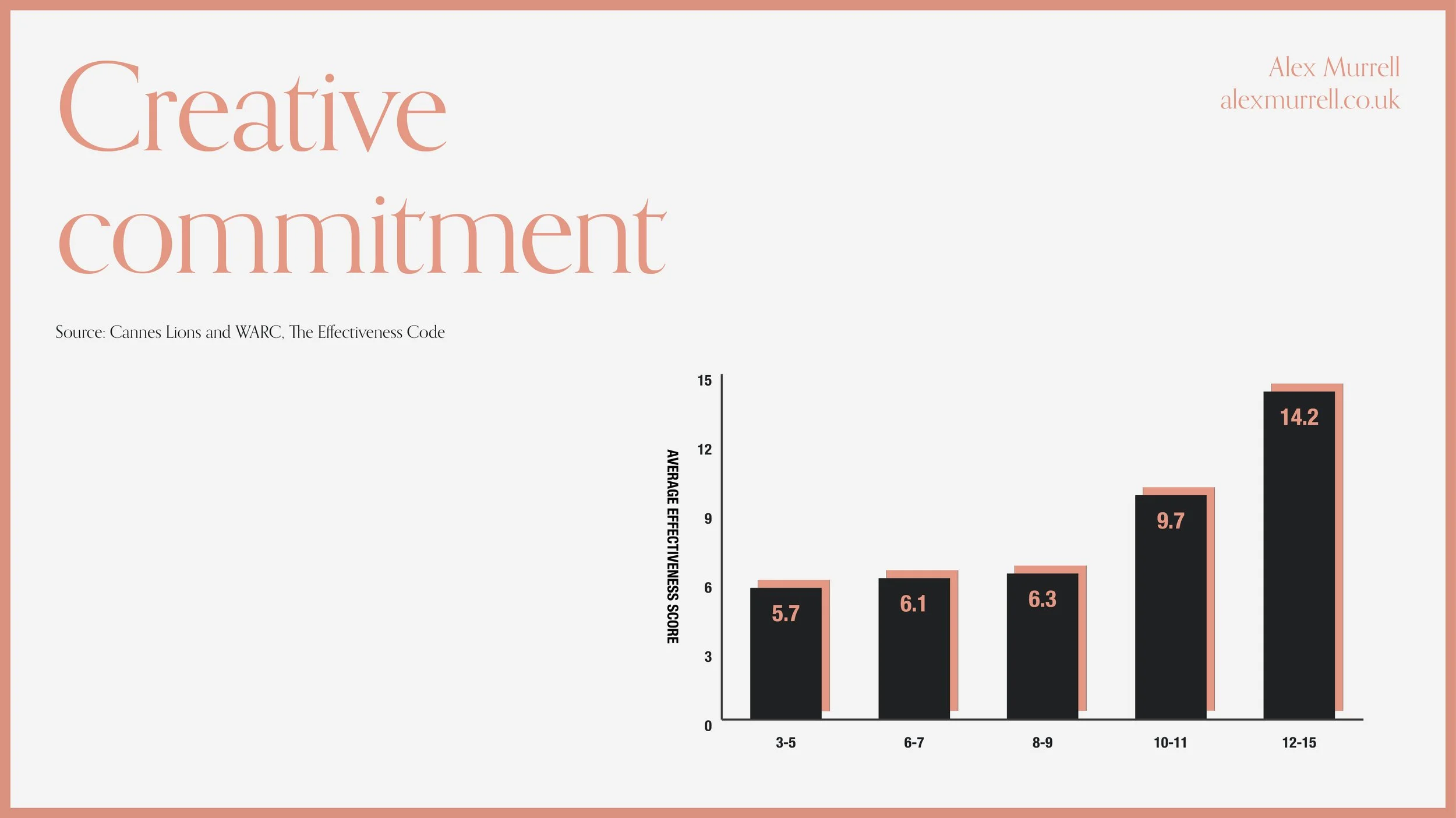
These three metrics can then be combined into a single composite measure that the researchers named Creative Commitment.
Perhaps unsurprisingly, this composite metric also correlates with effectiveness.
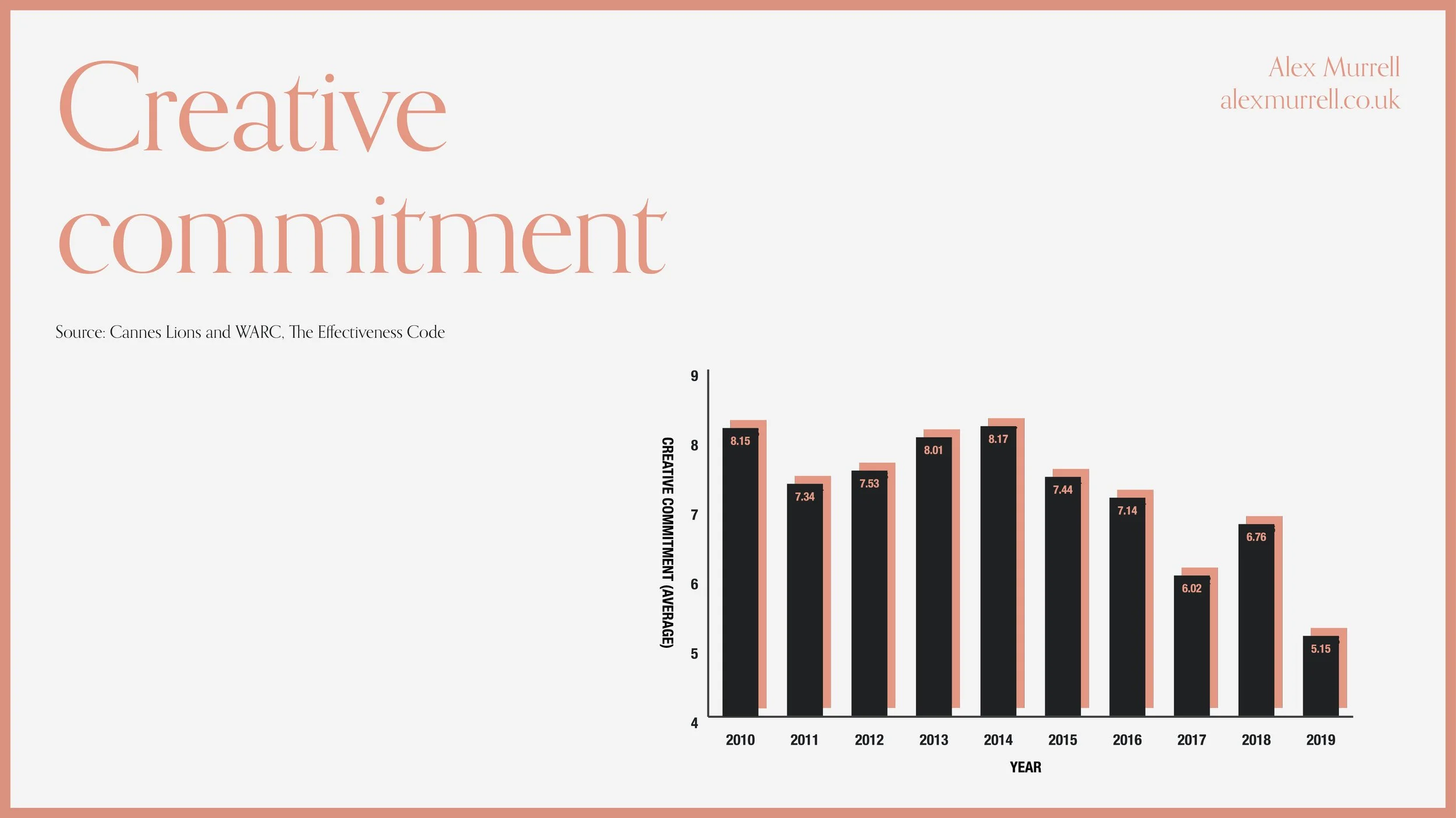
Finally, the report found that average Creative Commitment scores have fallen from 8.15 in 2010 to 5.15 in 2019. Campaigns are being activated over fewer channels, for shorter periods and with less media spend.
Creative Effectiveness Ladder
The white paper also introduced the ‘Creative Effectiveness Ladder’ which identifies the six main types of effects that marketing communications produce.
The framework organises campaigns into a hierarchy of levels from least to most commercially impactful.
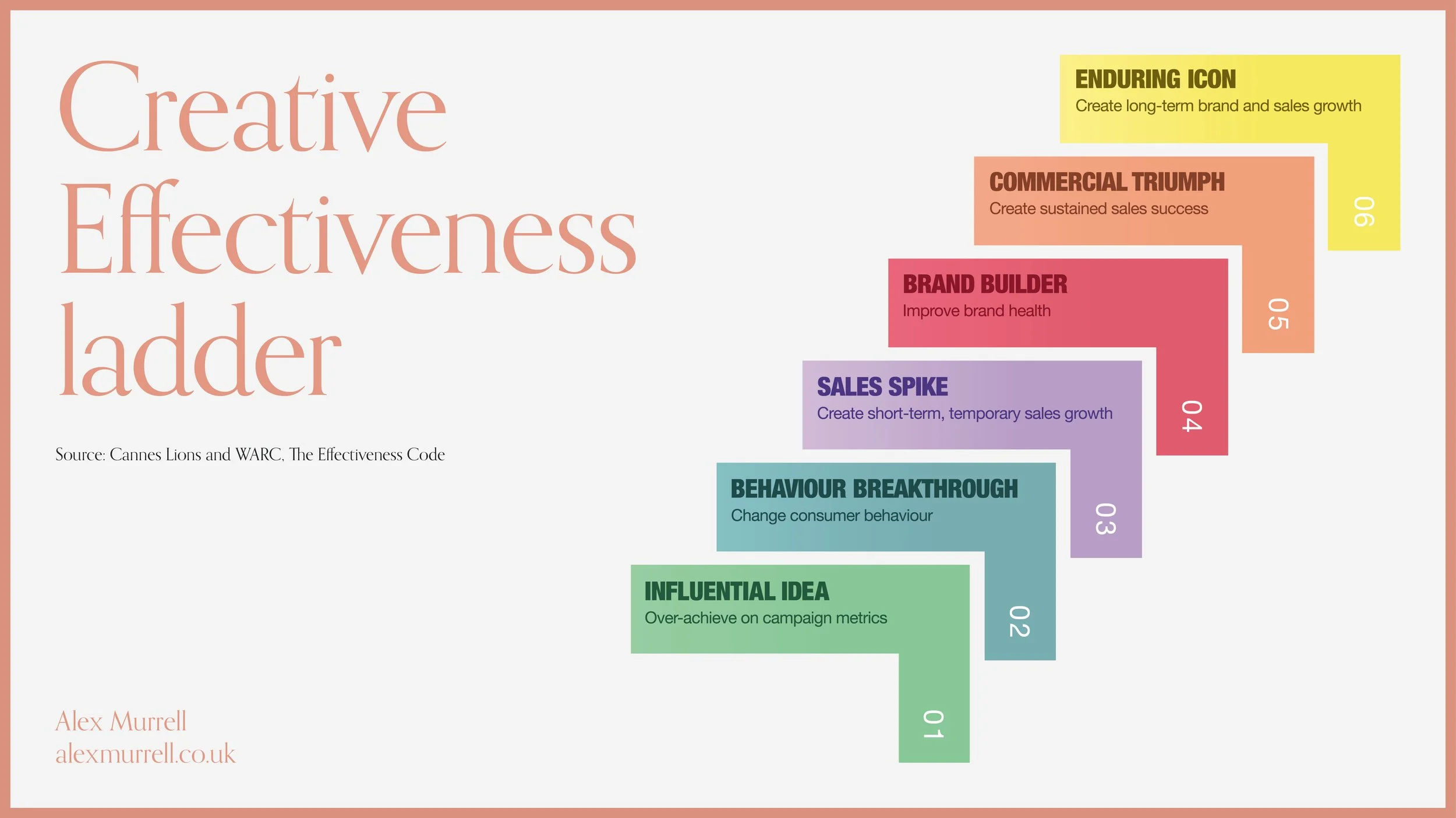
Level 1 - Influential Idea: ‘Influential Idea’ campaigns use creativity to maximise engagement and sharing, resulting in the campaign over-achieving on campaign metrics and media efficiency.
Level 2 - Behaviour Breakthrough: ‘Behaviour Breakthrough’ campaigns use creativity to change the purchase behaviour of customers – or to change other forms of behaviour relevant to the success of the brand.
Level 3 - Sales Spike: ‘Sales Spike’ campaigns use creativity to create short-term, temporary growth in sales, market share or profitability for a brand.
Level 4 - Brand Builder: ‘Brand Builder’ campaigns use creativity to improve the fundamental measures of brand health – including awareness, consideration, preference, purchase intent and image attribute ownership.
Level 5 - Commercial Triumph: ‘Commercial Triumph’ campaigns use creativity to profitably increase sales and market share beyond a single quarter or beyond the duration of the campaign.
Level 6 - Enduring Icon: ‘Enduring Icon’ campaigns use creativity to drive brand and sales growth consistently over a long period of three years or more. They stick with the same creative strategy or creative work throughout that period, creating sustained commercial outcomes.
The whole report is well worth a read. Highly recommended.
Pick up your copy here.